
Criminal Court Records in Calcasieu Parish
The main parish-level criminal court is the 14th Judicial District Court, which has original jurisdiction over civil and criminal matters in Calcasieu Parish. The Calcasieu Parish Clerk of Court keeps the court record, including criminal records from 1986 forward, criminal background searches from 1987 forward, criminal minutes from 1993 forward, and archive material from 1910 through 1985. The Clerk's criminal record is different from a sheriff booking record because it is tied to a case opened in court, not only to an arrest or jail stay.
Lower courts can matter. Lake Charles City Court handles Ward 3 traffic and criminal matters, and Sulphur City Court handles Ward 4 matters for Sulphur, Carlyss, and Westlake. A misdemeanor, traffic-related criminal matter, or failure-to-appear case may be in one of those city courts rather than the 14th JDC. Felony prosecutions and more serious district-level criminal matters route through the district court, with the District Attorney deciding what formal charges to pursue.
The Calcasieu Parish Clerk's Criminal Records Department page identifies the local department responsible for criminal records and older archives.
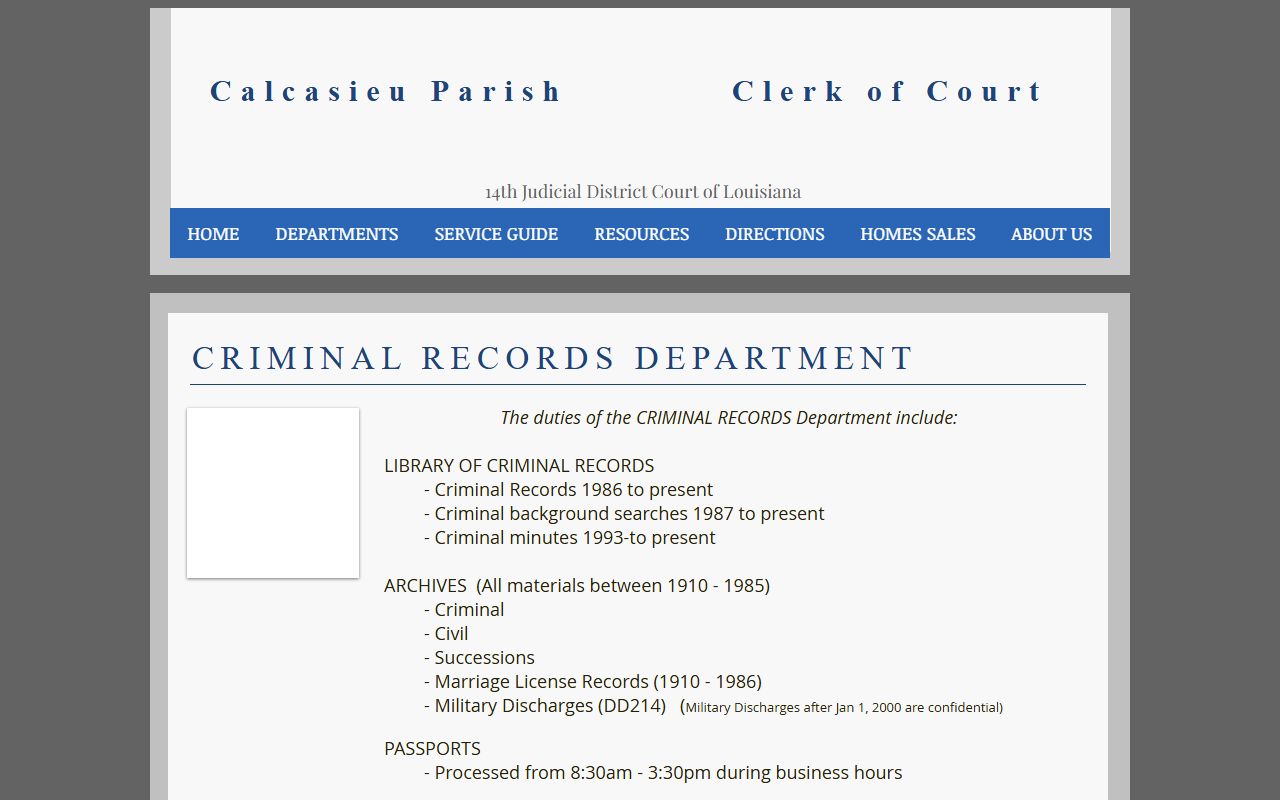
That source is important because it gives the date ranges for criminal records, background searches, criminal minutes, and archived criminal material.
How to Search Calcasieu Parish Criminal Court Records
Start with the Clerk's online search services page, which lists criminal index, criminal case history, and criminal minutes as local search categories. Remote search and printing can require a subscription account. The Clerk's fee page separates civil records through Clerk Connect from criminal and land records through eSearch or migration-related account access, and it notes that users who need all categories may need more than one account.
- Identify whether the case belongs to the 14th JDC, Lake Charles City Court, Sulphur City Court, or another local court.
- Use the Clerk online search services for criminal index, criminal case history, or criminal minutes when the matter is a district-court criminal case.
- Search with the defendant name, case or docket number, approximate filing year, court, and record category when those details are available.
- For official copies, contact or visit the Clerk's office at 1000 Ryan Street, Lake Charles, because online records are a convenience and not the official public record.
- If the matter is a city-court misdemeanor or traffic criminal case, use the Lake Charles City Court or Sulphur City Court record channel instead of assuming the district-court search has it.
Known fees from the Clerk research include criminal and land records via eSearch at $20 for a one-day subscription plus $1 per page, $45 for one month plus $1 per page, or $540 for 12 months plus $1 per page. In-office record viewing remains available at no charge, with in-office print copies listed at $1 per page. Certified copy and mailing costs should be checked with the Clerk before ordering.
Calcasieu Criminal Case Flow
A criminal case record grows in stages. A person may first appear in a jail roster or arrest record, but the court file begins when a charging document, bill of information, indictment, or other criminal filing reaches the court. After that, the court record can show arraignment, plea, motions, hearing dates, minute entries, disposition, sentence, bond entries, fines, costs, probation terms, and appeal activity.
Case flow: Arrest or citation › DA screening › Charges filed › Arraignment › Pretrial hearings and motions › Plea or trial › Disposition › Sentencing or dismissal › Appeal, probation, payment, or expungement activity.
| Stage | What the Court Record May Show |
|---|---|
| DA screening | The arrest charge may be accepted, rejected, amended, reduced, or replaced before formal filing. |
| Arraignment | The defendant is advised of the filed charge and enters an initial plea such as guilty, not guilty, or no contest. |
| Pretrial / motions | Minute entries may reflect continuances, discovery, bond issues, subpoenas, suppression motions, or specialty-court referrals. |
| Plea or trial | The record may show whether the case resolved by guilty plea, no contest plea, bench trial, jury trial, acquittal, or dismissal. |
| Disposition and sentence | The file may show the outcome, sentence, probation terms, fines, costs, jail credit, and conditions ordered by the judge. |
What a Calcasieu Parish Criminal Court Record Shows
The researched Calcasieu court-record fields are practical rather than portal-specific because the full case search is login-gated. A criminal case file may include these items when they exist and are public. The public view can be limited by redactions, sealed records, expungement orders, juvenile restrictions, and login limits.
| Field | What It Shows |
|---|---|
| Case or docket number | The court tracking number used by the Clerk, court division, and copy desk. |
| Court and division | Whether the matter is in the 14th JDC, Lake Charles City Court, Sulphur City Court, or another local venue. |
| Defendant and parties | The named defendant and, where shown, state/prosecution party information. |
| Filed charges | The court-level charges filed after DA screening, not necessarily the same wording as the arrest or booking charge. |
| Minutes and hearings | Clerk minute entries summarizing court appearances, orders, continuances, pleas, and hearing dates. |
| Plea and disposition | The plea entered and the result of each charge, such as guilty, dismissed, rejected, acquitted, or no contest. |
| Sentence and costs | Jail, probation, fines, court costs, conditions, and other sentencing orders if imposed. |
| Copy status | Whether a plain copy, certified copy, official record, or in-office review is needed. |
Charges vs. Convictions
A charge is an accusation or formal allegation. A conviction is an outcome after a guilty plea, no contest plea where treated as a conviction for the case, or a finding of guilt. Calcasieu Parish users should not treat a jail roster charge, an arrest charge, or a pending court charge as proof of conviction. For the arrest-to-charge path, see Arrest Records & Charges; for custody status, see Inmate Records.
| Charge | Conviction | |
|---|---|---|
| Meaning | An allegation filed or listed by law enforcement, DA, or court. | A final guilty outcome by plea, verdict, or judgment. |
| Can change? | Yes. It may be amended, reduced, added, rejected, or dismissed. | Changes usually require a later court order, appeal, expungement, or correction. |
| Where to verify | Clerk criminal case history, criminal minutes, DA request, or city-court file. | Certified Clerk disposition, court minutes, sentence, or DA disposition letter. |
Public Access and Official Copies
Louisiana public-records law begins with the custodian that created or keeps the record. For Calcasieu criminal court records, that usually means the Clerk of Court or the specific lower court. For DA records or disposition letters, the District Attorney requires written requests on official forms and lists the Public Records Division at publicrecords@cpdao.org and 337-437-3064. For sheriff booking records or law-enforcement records, CPSO has its own public-records request channel.
The Calcasieu Parish District Attorney provides a public records request page for DA records and disposition-letter requests.
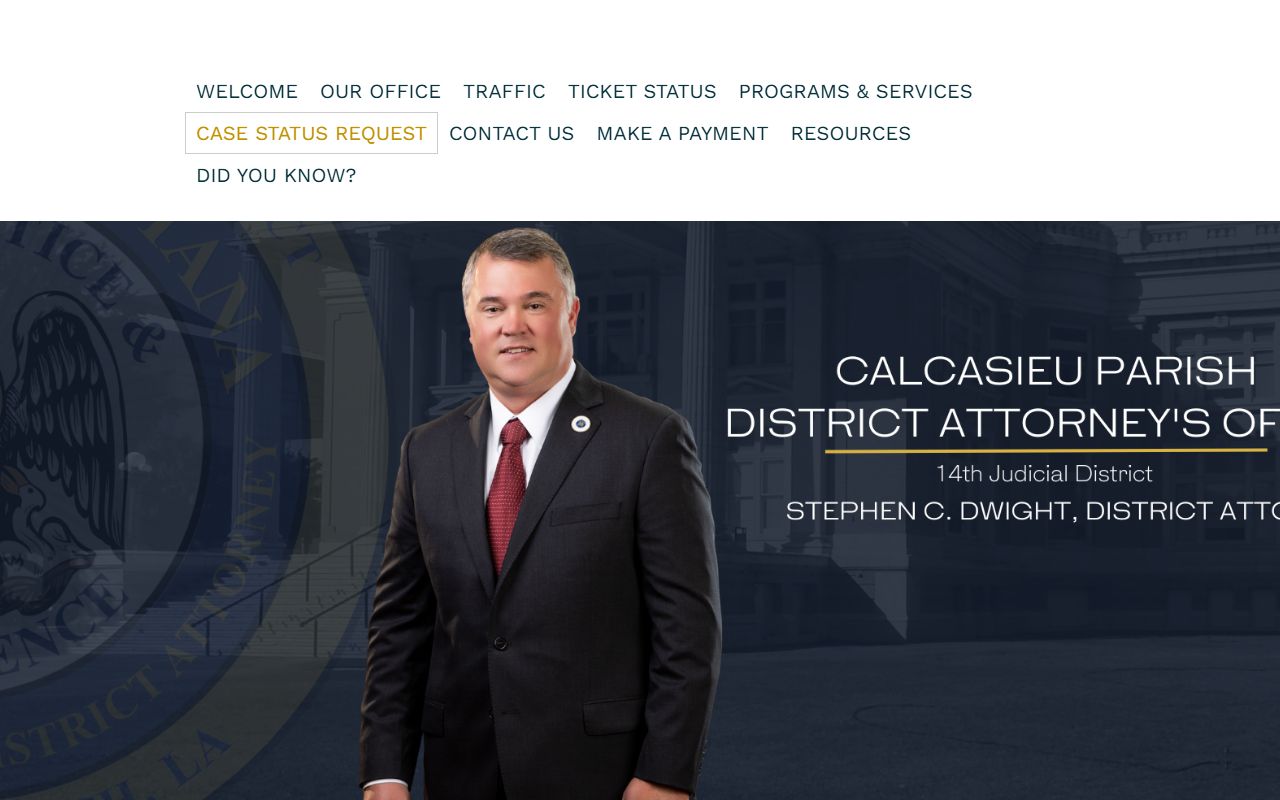
The DA channel is useful when the question is about prosecution records, charge screening, or a disposition letter rather than a certified Clerk copy.
Key access rules: La. R.S. 44:1 defines public records broadly, and Title 44 includes inspection and copy rules plus law-enforcement exceptions. Louisiana Code of Criminal Procedure articles 971-999 govern expungement from public access.
Public Defender, DA, and Disposition Checks
The District Attorney is Stephen C. Dwight, and the DA site describes criminal, traffic, victim-services, specialty-court, pre-trial diversion, and public-records functions. Diversion or specialty-court participation may affect how a charge resolves, so a case can end without a simple conviction entry. The official District 14 public defender office covers Calcasieu Parish, with District Defender Harry Fontenot at 121 W. Pujo Street, Suite 130, Lake Charles, phone 337-436-1718, Monday through Friday, 8:30 AM to 5:00 PM.
The Louisiana Public Defender District 14 page is an official source for appointed-counsel contact details in Calcasieu Parish.
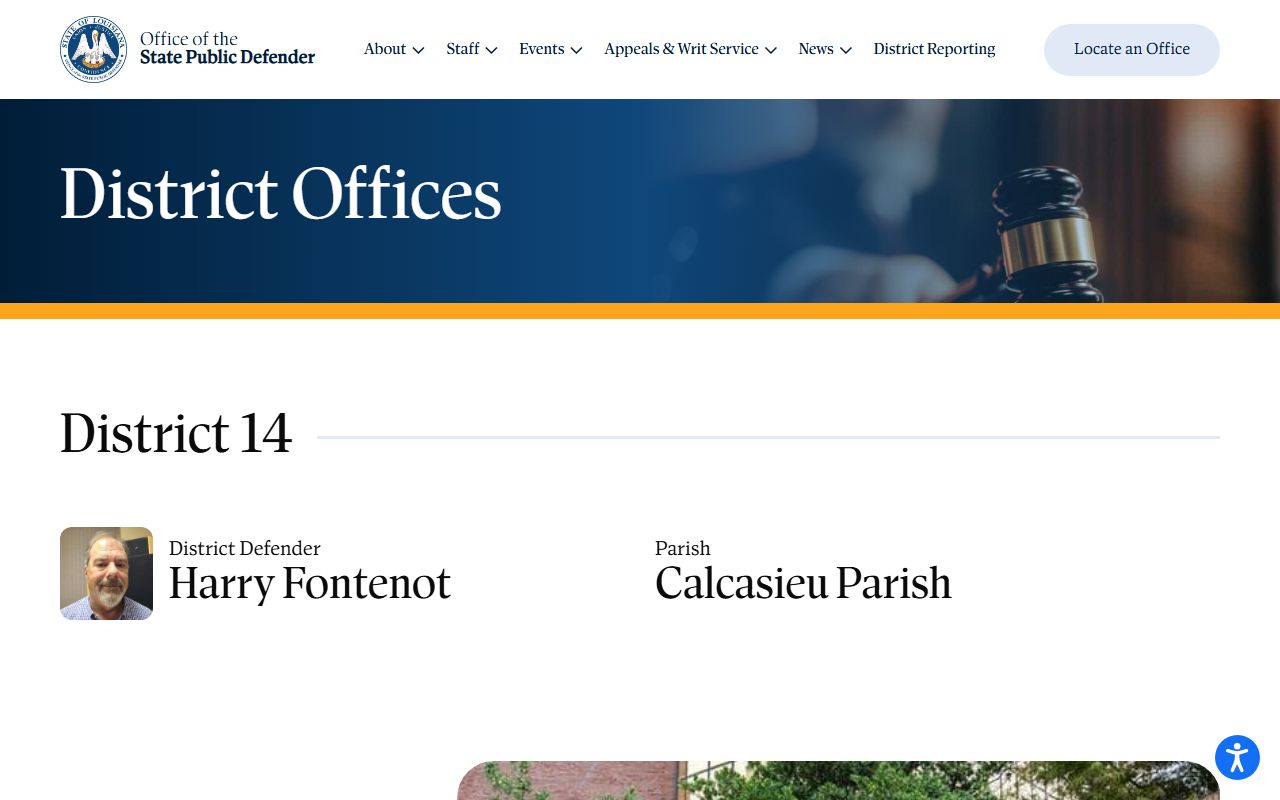
This source helps distinguish court-record research from representation questions, which belong with counsel or the public defender rather than the Clerk's record counter.
Sealed vs. Expunged Records
Calcasieu criminal records can be restricted by sealing, expungement, juvenile confidentiality, adoption confidentiality, mental-health restrictions, or redactions. Expungement in Louisiana generally removes qualifying records from public access, but it does not mean every agency destroys every underlying record. Eligibility depends on the case outcome, offense type, prior history, timing, and whether the matter was arrest-only, misdemeanor, felony, DWI, or Article 894-related.
Louisiana's legislature publishes the expungement title covering criminal procedure articles 971 through 999.
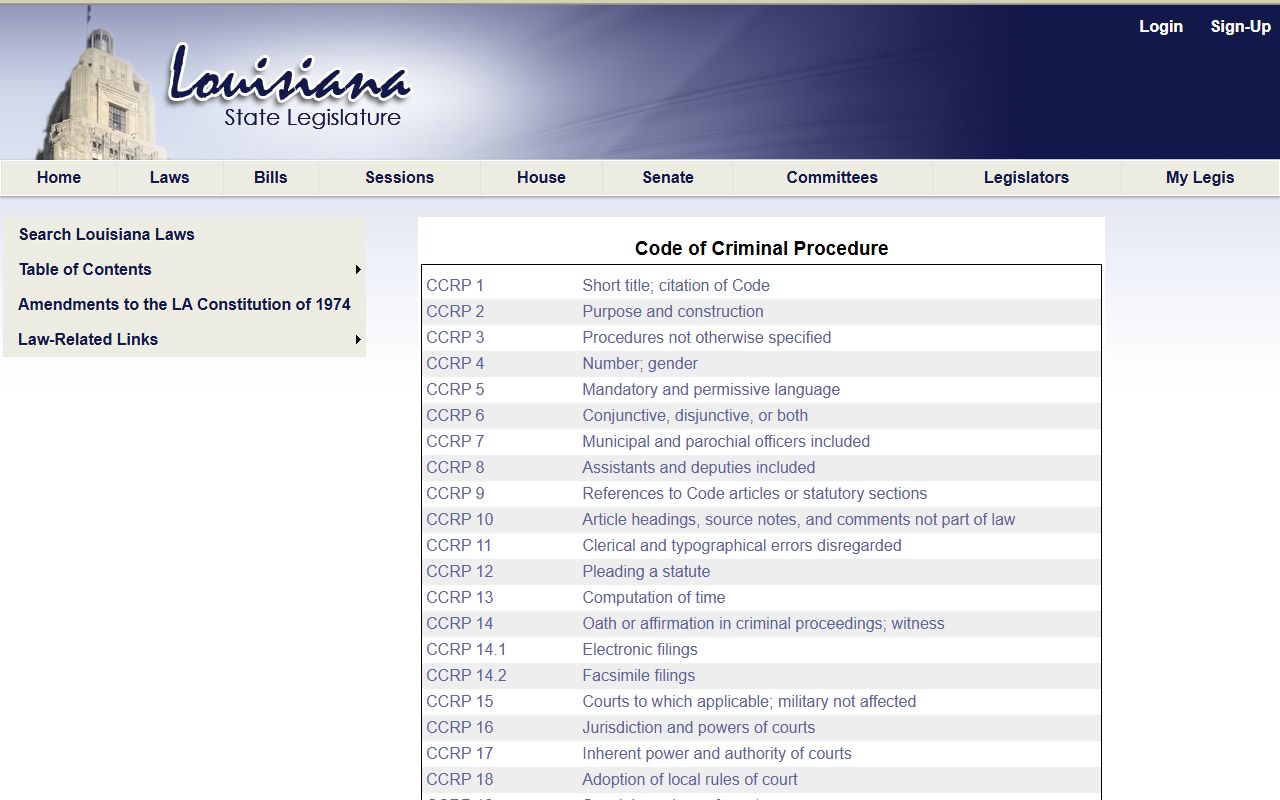
The statute source matters because eligibility is legal and fact-specific; a portal result alone cannot determine whether a record qualifies.
| Sealed | Expunged | |
|---|---|---|
| Public visibility | Access is limited by court order or law. | Qualifying records are removed from ordinary public access. |
| Agency records | May remain available to authorized users. | May remain available to certain agencies under Louisiana law. |
| Common path | Court order, juvenile restriction, confidentiality rule, or redaction. | Motion and order under Louisiana Code of Criminal Procedure articles 971-999. |
Restricted Criminal Court Records in Calcasieu Parish
Juvenile records should be treated as restricted unless an official court source or statute says a specific item is public. Louisiana has a specific rule for certain juvenile violence-case minute entries being transmitted to the LCRAA portal and remaining open unless sealed or expunged, but that narrow rule does not make all juvenile files public. Lake Charles City Court's public-records policy also requires redaction of Social Security numbers, driver's license numbers, dates of birth, and other identifying details for people other than the requestor or legal representative.
For old criminal files, the 1910 courthouse fire and archive cutoffs matter. The Clerk identifies criminal archives from 1910 through 1985, so older record requests may require archive handling and may not appear in modern online search results. For warrant issues connected to missed court, use the court that issued the warrant and the warrant records page for the fallback search path.