
Calcasieu Parish Arrest Records and Court Charges
Arrest records and court charges answer related but different questions. The Calcasieu Parish Sheriff's Office can show current custody through the public inmate roster, where visible entries include names, mugshots, View Charges links, and VINELink notification links. That is a booking and custody view. A court charge record is the charge filed in court after law enforcement and the District Attorney process the arrest. For the full court case file after filing, use criminal court records.
The research shows a practical chain: law enforcement makes an arrest or issues a citation, CPSO may publish roster or booking information, the DA screens the matter, and the Clerk or city court keeps the court file once a charge is filed. The filed charge may not match the initial arrest wording. It may be accepted, amended, reduced, dismissed, diverted, or resolved through a plea, specialty court, trial, or other disposition.
How to Find Calcasieu Parish Arrest Records and Charges
Use every official channel that matches the record type. For present custody or booking context, check the CPSO inmate roster. For filed court charges in the 14th JDC, use the Clerk's criminal index, criminal case history, and criminal minutes categories. For DA charge status or disposition letters, use the DA's written public-records process. For Ward 3 or Ward 4 city-court matters, contact Lake Charles City Court or Sulphur City Court.
- Start with the person's full name, date of birth if known, arrest date, citation number, or case number.
- Check current custody on the CPSO roster when the person may still be in parish jail.
- Search the Clerk's criminal categories for filed charges in district court.
- Check Lake Charles City Court for Ward 3 traffic or misdemeanor charges and Sulphur City Court for Ward 4 matters.
- Use the DA written request channel for DA disposition letters, public records, or status details not shown in a court search.
Do not rely on a third-party mugshot or background-check site to determine the current charge status. The official channels can show whether the charge was rejected, amended, diverted, dismissed, or resolved.
How Charges Get Filed After an Arrest
After an arrest, the initial booking language may come from law enforcement. The court charge is the formal accusation filed in a court record. In Louisiana practice, a charge may appear through a bill of information, indictment, complaint, citation, or other charging paper depending on the offense and court. The Calcasieu Parish DA site is important because the DA screens cases, handles traffic and criminal divisions, operates public-records and disposition-letter request channels, and works with diversion and specialty courts.
| Charging Document | Filed or Initiated By | Why It Matters |
|---|---|---|
| Bill of information | District Attorney | Common formal filing method for prosecuted charges in district court. |
| Indictment | Grand jury process | Used for serious matters where a grand jury charges the offense. |
| Complaint or citation | Officer, prosecutor, or court process | May start lower-level, municipal, traffic, or misdemeanor proceedings. |
| Minute entry | Clerk or court | Tracks what happened in court after the charge was filed. |
Charge Status and What It Means
Charge status is the part of the record that often changes. A person may be booked on one charge, formally charged with a different offense, have a count amended, enter a plea to a reduced charge, complete pre-trial diversion, or receive a dismissal. A single arrest may produce several separate counts, and each count can have its own status.
| Status | What It Means | Where to Verify |
|---|---|---|
| Pending | The filed charge has not reached final disposition. | Clerk case history, criminal minutes, or city-court record. |
| Amended or reduced | The filed charge changed from the initial wording or severity. | Court minutes, DA status, or certified disposition. |
| Rejected or no bill | The prosecution did not proceed with that charge as filed or screened. | DA disposition letter or court record if a file exists. |
| Dismissed | The court or prosecutor ended that charge without conviction on that count. | Certified Clerk disposition or minute entry. |
| Guilty or no contest | The charge resolved by plea, with sentencing terms if accepted by the court. | Disposition, sentence, and minutes. |
DA Status, Traffic Charges, and Written Requests
The DA traffic section shows how Calcasieu charge records can depend on the agency and court listed on a citation. It receives citations from Louisiana State Police, McNeese University Police, CPSO, and Sulphur Police Department. The top right corner of the ticket identifies whether the matter belongs to the 14th Judicial District, Ward 4/Sulphur City Court, or Ward 3/Lake Charles City Court. DA public-records and disposition-letter requests must be made in writing on provided forms, and the Public Records Division contact is publicrecords@cpdao.org or 337-437-3064.
The DA ticket-status page is an official source for traffic status fields used in Calcasieu Parish.
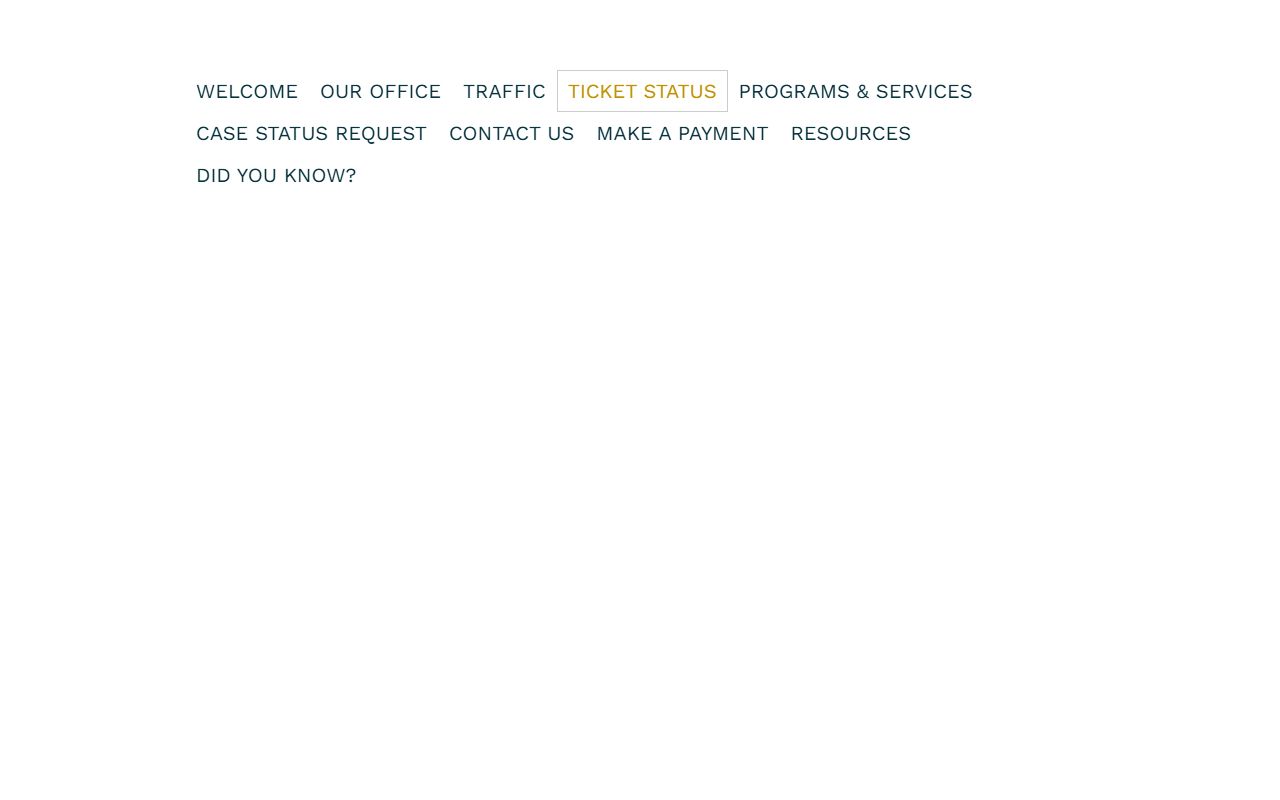
That form supports charge-status research because it asks for identifying ticket data rather than only a name search.
| DA Ticket Status Field | Purpose |
|---|---|
| First name and last name | Identifies the person tied to the citation or charge inquiry. |
| Date of birth | Reduces false matches when names are common. |
| Ticket number | Connects the inquiry to the citation and proper court routing. |
| Provides the response channel for the status request. | |
| Questions/comments | Allows the requestor to describe a charge-status problem or payment issue. |
Charges vs. Convictions
Being arrested or charged is not the same as being convicted. A charge is an allegation that may be pending, changed, dismissed, or rejected. A conviction is a final guilty result through plea, verdict, or judgment. When a background question asks about convictions, a pending arrest record or dismissed charge should not be treated as the same thing. When an official asks for all arrests or charges, the requester should follow the exact wording and obtain certified court dispositions where needed.
| Charge | Conviction | |
|---|---|---|
| Stage | Filed accusation after arrest or citation. | Final guilty outcome or accepted plea. |
| Can be dismissed? | Yes, before or during court proceedings. | Only changed by later legal action such as appeal, correction, or expungement. |
| Best proof | Filed charging document, minutes, DA status, or court case history. | Certified disposition, sentencing minute, or judgment. |
Specialty Courts and Diversion Can Change Charge Outcomes
Calcasieu Parish has several adult specialty-court programs tied to the 14th JDC and the District Attorney. The official DA page lists Adult Drug Treatment Court, DWI Court, Behavioral Health Court, Re-Entry Court, and Veterans Treatment Court. The programs are described as joint work involving the 14th JDC judges, District Attorney Stephen C. Dwight, CPSO, Probation & Parole, Imperial Calcasieu Human Services Authority, and the Department of Veterans Affairs.
The DA specialty-courts page is the local source for these charge-resolution programs.
Specialty-court participation can affect how a filed charge is supervised, monitored, dismissed, reduced, or finally disposed, depending on the court order and program result.
Sealed vs. Expunged Arrest Records and Charges
Louisiana expungement rules are important for arrest records and charges because a non-conviction, rejected charge, Article 894-type misdemeanor, or qualifying conviction may have a different access result than an ordinary pending case. Lake Charles City Court says misdemeanor expungement eligibility for city/state charges handled there requires an Article 894 sentence or a rejected/dismissed charge before filing, and users should call the Violations Office to determine eligibility and fees.
| Sealed | Expunged | |
|---|---|---|
| Public access | Limited by order, law, or court restriction. | Removed from ordinary public access when legally granted. |
| Typical trigger | Juvenile, confidential, sensitive, or court-restricted material. | Formal expungement motion and signed order. |
| Agency access | Authorized agencies may still see restricted data. | Some agencies may retain or access records under Louisiana law. |
Juvenile and Restricted Charge Records
Juvenile charge records are not ordinary public arrest records. Louisiana law includes special juvenile sealing and expungement rules, and the research found a specific statute requiring certain juvenile violence-case minute entries to be transmitted to the LCRAA portal and remain public unless sealed or expunged. That narrow rule should not be read as open access to all juvenile case details. Adoption, mental-health, protective-order, and redacted identity information may also be restricted.
Louisiana's statute on specified juvenile violence-case minute access is published by the Legislature.
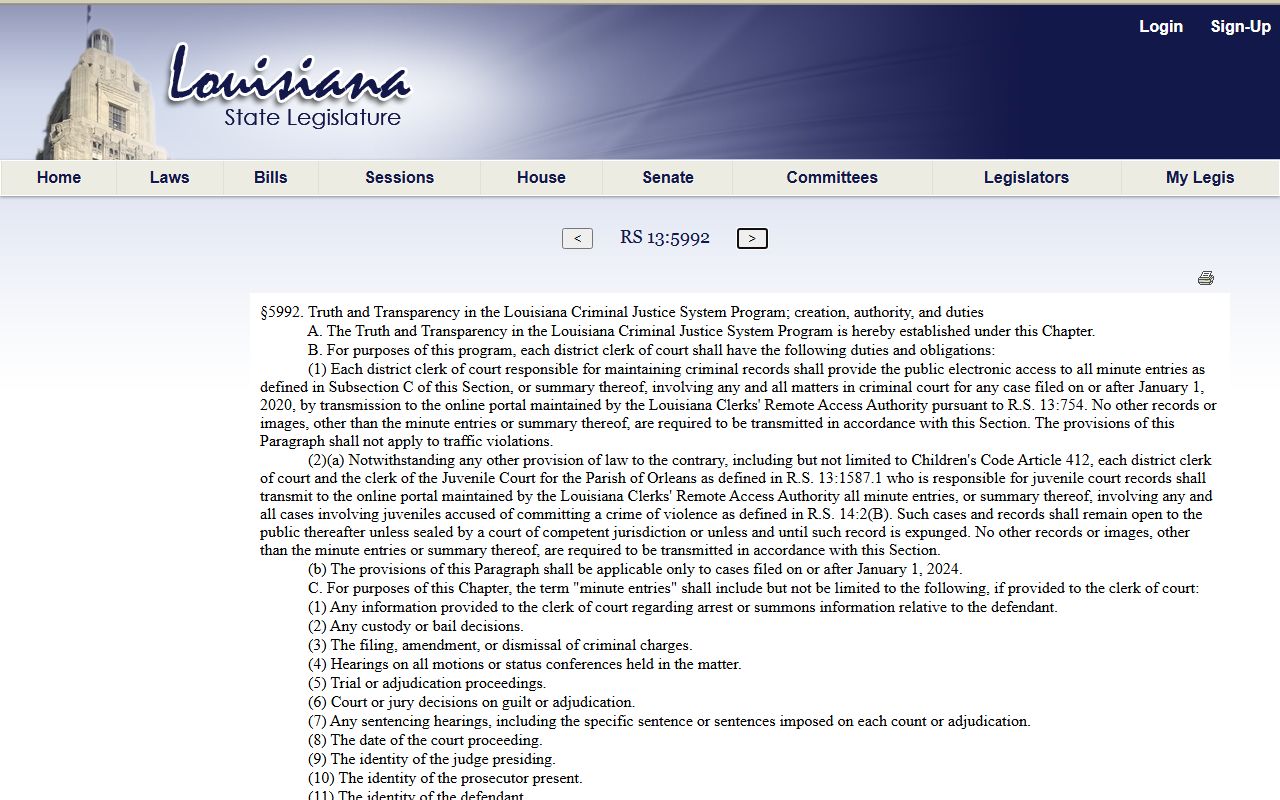
This source is useful because it shows that public access rules can be narrow and statute-specific rather than a general permission to search juvenile records.
Public Records Requests for Arrest and Charge Details
When a portal does not answer the question, send the request to the correct custodian. CPSO handles sheriff records and jail information not shown online. The DA handles DA records, charge status, and disposition letters through its written-request process. The Clerk handles certified district-court criminal dispositions and copies. Lake Charles City Court requires written public-record copy requests on its approved form and charges local copy fees. Sulphur City Court should be used for Ward 4 criminal and traffic matters.
A precise request should include full name, date of birth, arrest date, agency, case or ticket number, court, charge wording, and whether a certified disposition is needed. For custody notifications, VINELink can track status changes from the CPSO roster; for statewide custody after transfer to DPS&C, use LAVNS or the DPS&C phone locator.
Important: Arrest, charge, and conviction records have different meanings. Verify final outcomes with the court or DA before using a record for any formal purpose.